What happens inside us when things get heavy?
And how do we find our way back to ourselves when the weight of it pulls us away? That question is where Corestead began.
Returning to Self
This work didn't start with a framework. It started with a question.
Corestead emerged from a personal exploration during a difficult life chapter. Emily found the beginning of an answer in two places she didn't expect: under a barbell, and on the dancefloor. Again and again, she found herself practicing something she didn't yet have language for, what she came to call returning to Self.
Over time that practice became a framework. And that framework became Corestead.
The name says it plainly. Core is the center you lift from, and lead from. Stead is an old word for a place to stand. Corestead is the steady place you come back to.
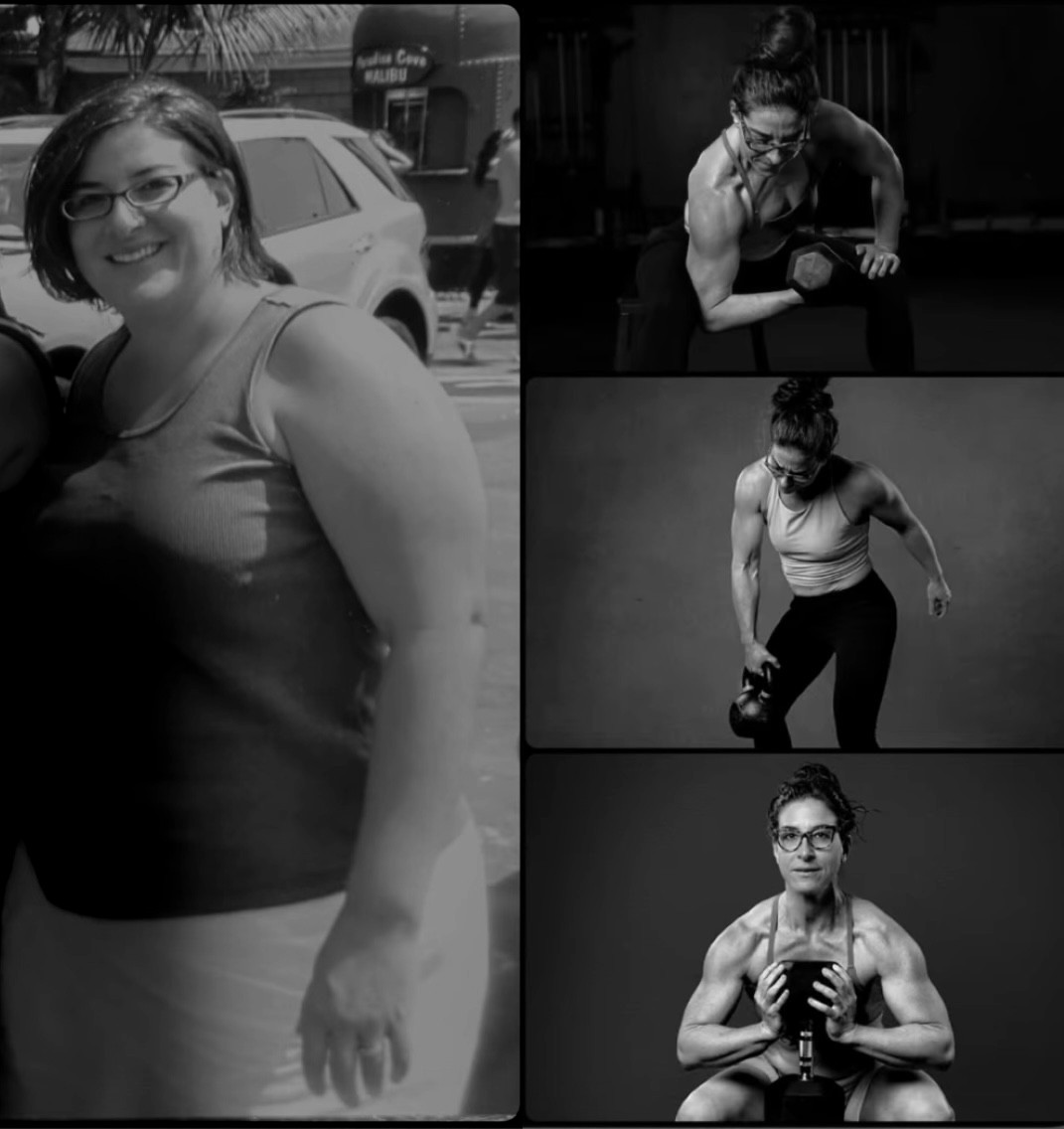
Where the practice began.
The gym is where Emily first noticed the patterns, and where she practiced a different way of responding to them. The change that mattered most is not the one you can see.

Emily
Frydrych
Emily Frydrych is a sociology professor with more than 20 years of university teaching experience and the founder of Corestead, a self-leadership framework that uses the gym as a laboratory for navigating pressure.
Corestead grew from an unexpected intersection between academia and the weight room. During one of the hardest and most liberating chapters of her life, Emily began noticing that the same internal patterns she encountered under a heavy barbell were showing up far beyond the gym, in leadership, relationships, parenting, and everyday life. Over time, those observations became the Corestead Method, a practical framework for recognizing patterns, building capacity, and finding your way back to yourself under pressure.
Before entering higher education, her work focused on gender-based violence prevention and anti-violence initiatives, including international work in Nepal.
Today she teaches the Corestead Method through workshops, keynote presentations, and organizational programs for fitness communities, wellness spaces, universities, and organizations. She is currently writing a book based on the Corestead framework.
Work With EmilyCredentials
M.A., University of Chicago
B.A., University of Michigan
Current Work
Research combining Internal Family Systems theory with strength training as a metaphor for internal dynamics, and a book in progress on the Corestead framework and beyond.
Strength isn't just what your muscles can do.
Strength is how you stay with yourself when things get heavy.